


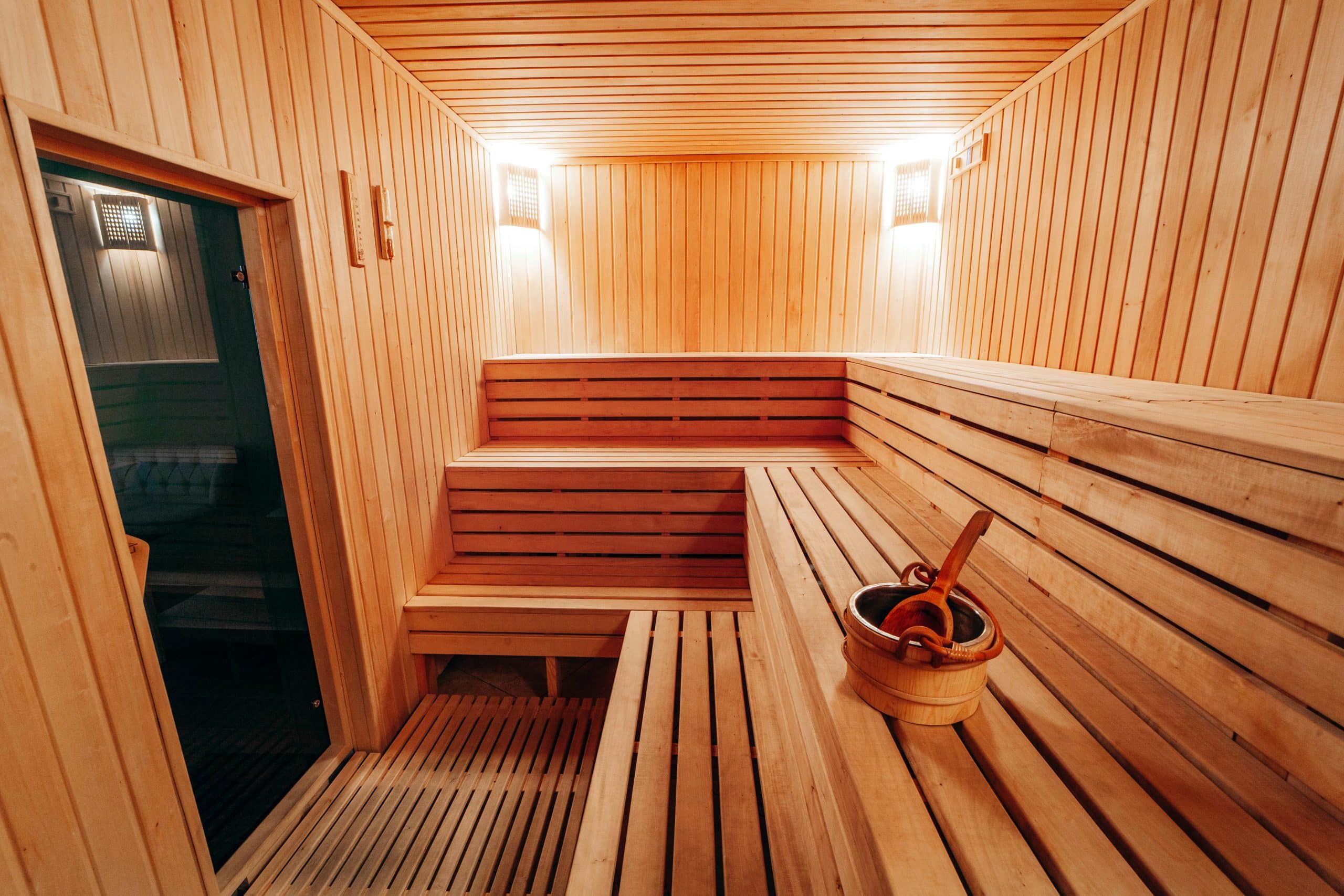
A home sauna is one of the few wellness purchases that changes how a house gets used in winter, and Colorado gives people more reason than most states to want one. Dry air, long cold stretches, altitude, and a population that skis and rides hard all point in the same direction. The team at Mile High Hot Tubs walks people through this decision every week, and the pattern is consistent: buyers arrive focused on brand, and leave focused on four things that actually matter. Type of heat. Size. Where it goes. What the electrical will take.
This guide covers those four in order, plus the costs that sit outside the sticker and the questions worth asking before anything gets ordered. If you are still deciding whether a sauna belongs in your home at all, the broader case for it is covered in our look at why more Colorado families are buying saunas.
Start With the Type of Heat
Nearly every home sauna decision in Colorado comes down to three categories. They feel different, they install differently, and they suit different houses.
Full-spectrum infrared cabins
Infrared saunas warm your body directly with radiant energy rather than heating the air around you. The cabin air usually sits somewhere in the range of 110 to 150 degrees, which reads as much gentler than a traditional sauna even though the session can run considerably longer. They warm up in ten to twenty minutes, they run on ordinary household power in most sizes, and they assemble indoors without a build. That combination is why they dominate the indoor market. You can see the format and the layouts on our infrared sauna pages.
The health side of infrared is its own subject, and we cover it separately in the health benefits of infrared saunas.
Traditional barrel saunas
A barrel sauna is the classic experience: an electric heater with stones, air temperatures well above what infrared reaches, and the option to ladle water over the rocks for a burst of steam. The barrel shape is not styling. The curved ceiling keeps heated air circulating down over the benches instead of stacking uselessly at the top, which is part of why a well-built barrel comes up to temperature in roughly 45 minutes despite the volume it has to heat. These live outdoors in most Colorado installs. Our barrel sauna section shows how they are built.
Personal and portable units
Personal saunas are single-occupant units with a much smaller footprint, often collapsible, and they plug into a standard outlet. They exist for apartments, spare bedrooms, and anyone who wants to try consistent heat exposure before committing a permanent room to it. See the personal sauna format for what that looks like in practice.
What Actually Drives the Price
Sauna pricing is less mysterious than it looks. Five things move the number, and they move it in a predictable order.
- Size and bench count. Every additional person means more cabinet, more wood, more heaters, and more power. The jump from a two-person to a three-person cabin is the single largest price step most buyers encounter.
- Heater technology. A full-spectrum unit that combines far, mid, and near-infrared emitters costs more than a far-infrared-only cabin, because it carries more heater types and more control hardware.
- Wood and construction. Solid eucalyptus, cedar, and fir all behave differently under heat and humidity, and thickness matters as much as species.
- Features. Chromotherapy panels, Bluetooth audio, app control, glass area, and interior and exterior controllers all add cost.
- Indoor versus outdoor rating. An outdoor unit is built for weather, and that construction is not free.
Because price bands move with model year and configuration, the honest answer on a specific number is to ask. If you want to know what a particular size and heat type runs right now, the people on the floor at our Colorado showrooms can tell you in about a minute. If you would rather spread the purchase, our financing options apply to sauna purchases too.
Electrical Readiness Is the Step That Surprises People
This is where sauna projects stall, and it is entirely avoidable. Home saunas fall into roughly three electrical tiers, and they are not interchangeable.
Personal and one-person units generally run on 110 or 120 volts at about 15 amps and plug into a standard household outlet, drawing under a kilowatt. Two-person infrared cabins are usually still 120 volts at 15 amps, though they draw considerably more, and manufacturers commonly want that outlet on a dedicated circuit. Three-person cabins typically step up to a 120 volt, 20 amp circuit with a NEMA 5-20P plug, which is a different receptacle than the one already in your basement wall. Larger four-person and lounge-style full-spectrum cabins often move to 230 volts at 15 amps on a NEMA 6-15P outlet.
Traditional electric heaters are a different conversation entirely. A 6-kilowatt barrel heater wants a 220 to 240 volt, 30-amp hardwired connection. That is an electrician’s job, a permit in most Front Range jurisdictions, and a line run to wherever the sauna sits in the yard.
The practical advice: find the model’s electrical spec before you fall in love with a spot in the house. Then have an electrician look at your panel. A panel with no spare capacity turns a plug-in purchase into a service upgrade, and you want to know that in week one, not on delivery day.
Where the Sauna Will Actually Go
Indoors, the three common homes for a sauna are the basement, a spare bedroom or home gym, and a large primary bathroom. Basements win most often in Colorado houses because the floor is already concrete or well supported, the space is usually underused, and the cooler ambient temperature makes the contrast more pleasant.
Three things to check before you commit to a room:
- The path in. Sauna panels arrive as flat sections, but they are large flat sections. Measure your stairwell turn, your doorways, and any tight landing.
- The floor. A loaded cabin with occupants is a concentrated load. A concrete slab is ideal. On a framed floor, know what is underneath.
- Ceiling height. Most cabins land between 75 and 78 inches tall on the exterior. A finished seven-foot basement ceiling usually clears, but check after flooring, not before.
Outdoors, the questions shift to foundation, wind exposure, the walk from the door in February, and getting power to the pad.
Sizing: Buy for the Bench, Not the Room
Person counts on sauna models describe seated capacity at a comfortable but not generous spacing. A two-person cabin is genuinely comfortable for two adults sitting upright, and cramped if one of them wants to stretch out. If lying down matters to you, you are shopping lounge layouts, not two-person cabins.
Most Colorado households buy one size larger than they use, then discover the extra bench is where towels, water, and a phone live. That is not wasted space, but it is worth deciding on purpose. Browse by capacity to compare footprints directly: 2-person, 3-person, and 4-person saunas.
What to Look For in Build Quality
A few things separate a sauna that still feels good in year eight from one that does not.
- Wood that is solid, not veneered. Ask what species and whether the planks are solid through. Heat cycling finds every shortcut.
- Low EMF construction on infrared units. This should be documented for the heaters, the controllers,s and the wiring, not just the emitters.
- Heater coverage, not heater count. Ask where the emitters sit. Floor and lower-back heaters matter more to comfort than a headline number.
- Serviceable controls. Interior and exterior controllers, and a manufacturer who still supplies parts.
- A warranty you have read. Coverage periods differ by component, and the differences are meaningful.
Questions to Ask Before You Order
- What exact circuit does this model require, and is a plug included?
- What are the assembled exterior dimensions, and what clearance does the manufacturer specify around the cabinet?
- How does it ship, how many pieces, and what is the assembly time?
- What is covered under warranty, for how long, and who performs the work?
- What is the realistic lead time from order to in-home delivery?
- Can I sit in one first?
That last one carries more weight than people expect. Heat type is a preference, not a spec, and fifteen minutes in a cabin settles the infrared versus traditional question faster than any amount of reading.
Frequently Asked Questions About Buying a Home Sauna in Colorado
Do I need a permit for a home sauna in Colorado?
For an indoor plug-in unit, usually not, though the dedicated circuit that feeds it may require one. For an outdoor sauna on a new pad with a hardwired heater, expect to need both electrical and possibly structural review. Requirements are set locally, so call your city or county building department before you order.
Can a sauna go on carpet?
Manufacturers generally prefer a hard, level surface. Carpet can compress unevenly under load and complicates leveling. If carpet is the only option, talk to the manufacturer about what they allow.
How long does a home sauna last?
The cabinet outlives the electronics in almost every case. Solid wood cabinets hold up for well over a decade with normal care. Heaters and controllers are the serviceable parts, which is why parts availability is worth asking about.
Is a sauna hard on a household electrical bill?
Less than most people assume, particularly for infrared. A cabin only draws power while it is heating, and infrared units reach temperature quickly. Traditional heaters draw considerably more, both because the element is larger and because the warm-up is longer.
Should I get a sauna or a hot tub first?
They solve different problems, and plenty of Colorado homes end up with both. Our comparison of hot tubs and saunas lays out where each one earns its place.
Talk It Through With Someone Who Has Seen the Install
The fastest way to shortcut the research is to sit in a few different heat types, measure your space honestly, and get a straight answer on the circuit you need. If you are ready for that conversation, contact Mile High Hot Tubs, and we will help you narrow it down before anything gets ordered.

