


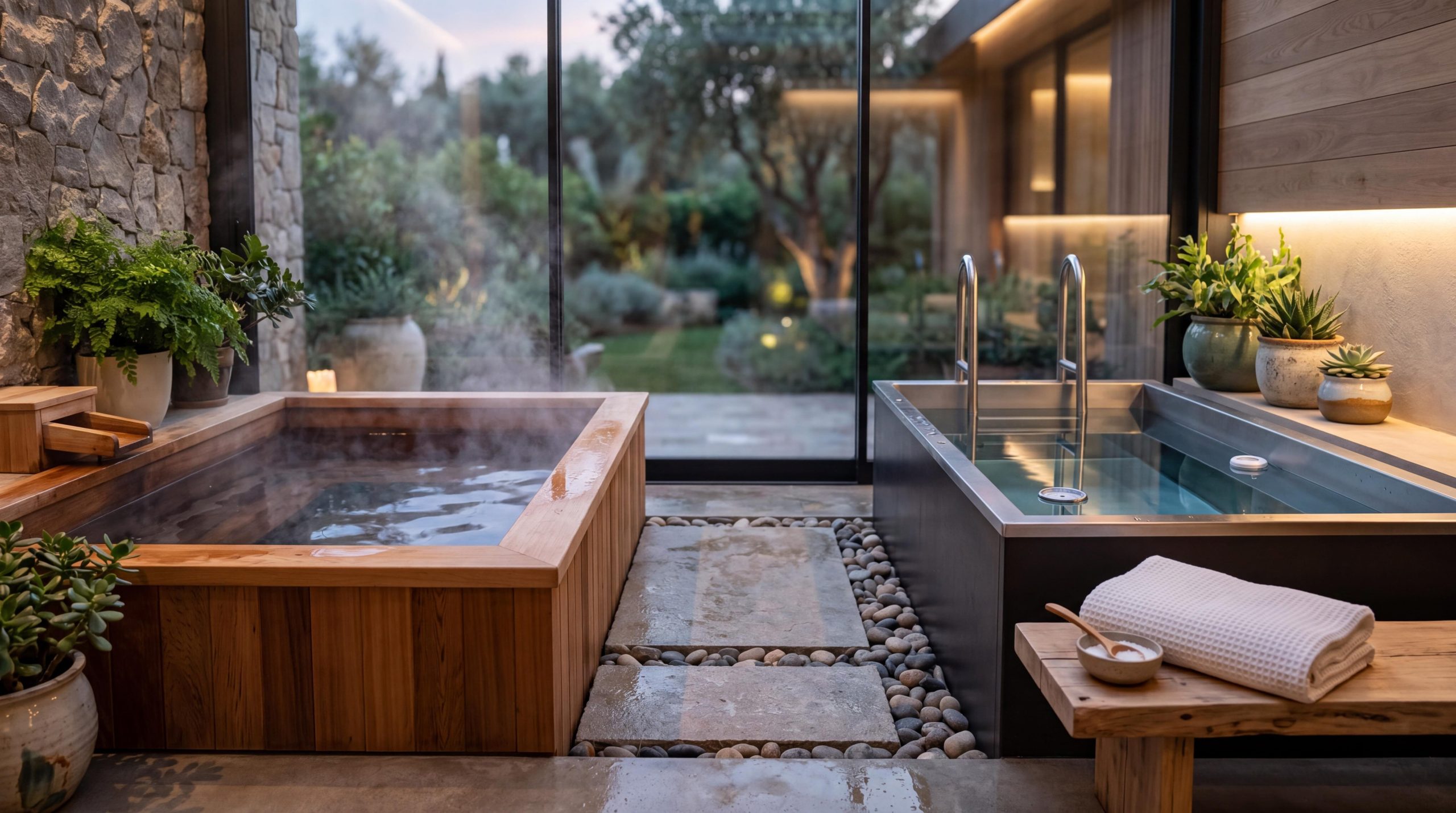
The recovery conversation among active Colorado homeowners has gotten more interesting in recent years. When Mile High Hot Tubs talks with Denver residents who are researching backyard recovery investments, cold plunge tubs have entered the conversation alongside hot tubs in a way they simply did not a few years ago. Social media has given cold plunge exposure it never had before, and the result is a generation of health-focused homeowners trying to figure out which investment actually makes sense for their lifestyle, their budget, and their year-round Colorado routine.
This guide gives an honest, practical comparison of hot tubs and cold plunges across the factors that matter most for Colorado homeowners making a real backyard investment decision.
What Each Option Actually Does
Before comparing the two, it helps to be clear about what hot tubs and cold plunges are each designed to do, because they are not simply warm and cold versions of the same thing.
A hot tub uses heated water, typically between 98 and 104 degrees Fahrenheit, combined with hydrotherapy jets and buoyancy to produce a recovery and relaxation experience that draws on heat’s ability to increase circulation, reduce muscle tension, and support the body’s natural recovery processes. The experience is immediately comfortable for most people, accessible to a wide range of users, and designed for sessions of fifteen minutes to an hour, depending on temperature and personal preference.
A cold plunge uses water chilled to between 39 and 59 degrees Fahrenheit to create a brief cold water immersion experience that produces a different set of physiological responses. Cold water immersion causes vasoconstriction, a rapid narrowing of blood vessels, followed by vasodilation as the body rewarms after exiting the cold water. It also triggers a significant stress hormone response, including norepinephrine release, that many cold plunge advocates describe as energizing and mood-enhancing. Sessions are typically much shorter than hot tub soaks, two to five minutes being the common range, because the cold water experience is intense enough that longer sessions require significant cold adaptation.
The Recovery Science: What the Evidence Actually Shows
The research on both hot and cold water immersion for exercise recovery is genuinely interesting and more nuanced than the confident claims on either side of the debate typically suggest.
Cold water immersion has reasonably strong evidence for reducing the perception of muscle soreness in the twenty-four to seventy-two hours after intense exercise, particularly for endurance athletes. The mechanism is primarily the reduction of local tissue temperature and the associated reduction in post-exercise inflammation. The limitation of the cold plunge research is that while it reduces perceived soreness effectively, there is emerging evidence suggesting it may also blunt some of the adaptation signals that drive training improvements, which has led some exercise scientists to recommend against cold water immersion immediately after strength training sessions specifically.
Warm water immersion has strong evidence for improving circulation, reducing muscle tension, and supporting relaxation following exercise. It is particularly well-studied for its effects on sleep quality, with consistent evidence showing that the body temperature drop following warm water immersion accelerates sleep onset. For recovery from high-volume endurance activity like long hikes, trail runs, or ski days, warm water therapy’s ability to drive circulation and reduce tension in loaded muscle groups is well-supported. Hot tub health benefits, a comprehensive guide covers the evidence base behind warm water therapy for active adults in more detail.
The most sophisticated recovery approaches used by elite athletes and sports science programs typically incorporate both thermal modalities at different points in the training cycle rather than choosing one over the other, which points toward the real answer for most Colorado homeowners: the question is not which is better, but which fits your life better.
Year-Round Usability in Colorado’s Climate
Colorado’s climate creates specific usability considerations for outdoor recovery equipment that matter significantly for the year-round value calculation.
A hot tub in Colorado gets used year-round because the warm water experience is comfortable and appealing in every season. Summer evenings, fall nights, winter snowfall, and spring mornings all create different but consistently enjoyable hot tub conditions. Denver’s climate, with its cold winters and warm but not oppressive summers, is arguably one of the best hot tub climates in the country. Use your hot tub all year round covers how Denver homeowners maximize year-round usage across Colorado’s seasonal changes.
A cold plunge in Colorado faces usability challenges in winter that hot tubs do not. Outdoor cold plunge units need to actively chill the water to maintain therapeutic temperatures in summer, and in winter the challenge reverses: the unit may need to heat the water to prevent it from freezing, and the psychological barrier to entering cold water when the ambient temperature is already well below freezing is real and significant. Many cold plunge owners report dramatically reduced winter usage compared to their summer frequency, which affects the year-round value calculation substantially.
For most Colorado homeowners who want a recovery investment that delivers consistent value across twelve months of the year, the hot tub’s seasonal versatility is a meaningful practical advantage.
Cost Comparison: Purchase, Installation, and Operating Costs
Comparing the total cost of ownership between hot tubs and cold plunges requires looking at purchase price, installation requirements, and ongoing operating costs together rather than simply comparing sticker prices.
Cold plunge units vary widely in price from basic uninsulated tubs without temperature control, which can be purchased for a few hundred dollars but provide inconsistent water temperatures, to quality chilled units with active cooling and filtration that range from three thousand to ten thousand dollars or more. The operating cost of a quality cold plunge unit with active chilling in Colorado’s summer heat can be meaningful, as the refrigeration system works harder in warm weather to maintain target temperatures.
Hot tubs range from entry-level models in the three to five thousand dollar range to premium models with comprehensive jet configurations and advanced insulation systems in the ten to twenty thousand dollar range. Installation requirements include a dedicated electrical circuit and a prepared surface, and operating costs for well-insulated modern hot tubs in Denver’s climate typically run thirty to sixty dollars per month. Beginners guide to financing your first hot tub in Colorado covers the financing options available for homeowners who want to spread the investment over time.
The more important cost comparison for most families is not between a basic cold plunge and an entry-level hot tub but between quality versions of each. At equivalent quality levels, hot tubs and cold plunges are often comparable in purchase price, but the hot tub’s greater capacity for year-round use and multi-user accessibility typically produces a higher total value per dollar invested over a five to ten year ownership period.
Family and Household Usability
Hot tubs and cold plunges differ significantly in their household usability beyond the single active adult who uses them for post-workout recovery.
A hot tub accommodates multiple users simultaneously, serves users across a wide age range, and provides an experience that most people find comfortable and enjoyable without prior adaptation or conditioning. Families with children, couples with different fitness levels and recovery needs, and households that entertain regularly all find hot tubs naturally accommodating. What age can a child get in a hot tub covers the age and safety considerations for family hot tub use.
Cold plunges are more specialized and less broadly accessible. The cold water experience requires psychological adaptation that many people find challenging, particularly in the early weeks of use. Children and older adults are generally not appropriate cold plunge users. Guests and household members who are not specifically committed to cold water practice are unlikely to use a cold plunge regularly. The result is that a cold plunge tends to be used by one or two committed individuals in a household rather than by the household broadly.
Combining Both: The Contrast Therapy Approach
The most performance-oriented approach to thermal recovery, used by elite athletes and adopted by a growing number of serious recreational athletes, involves alternating between hot and cold exposure in a protocol called contrast therapy. Moving between hot water immersion and cold water immersion in cycles produces a pumping effect on blood vessels that some research suggests may enhance circulation and recovery beyond either modality alone.
For Denver homeowners interested in contrast therapy, the practical implication is that both a hot tub and a cold plunge are needed, and the two are used together rather than as alternatives. This is a meaningful investment that some active homeowners find worthwhile, but it is a different decision from choosing one or the other. Hot tubs versus saunas covers a related comparison between thermal modalities that is a useful context for homeowners thinking about combined wellness investments.
Which One Is Right for Your Colorado Lifestyle?
The honest answer for most Denver homeowners is that a hot tub serves a broader range of needs, a wider range of household members, and a more consistent year-round use pattern than a cold plunge, and that the recovery benefits of warm water therapy are well-established and applicable to the specific activities that define Colorado’s outdoor lifestyle.
A cold plunge is a compelling addition for homeowners who are specifically committed to cold water practice, who have already established a hot tub or sauna as the anchor of their home wellness setup, and who want to add the specific contrast therapy or cold exposure benefits that a cold plunge uniquely provides.
For homeowners choosing between the two as a single investment, the hot tub’s versatility, accessibility, and year-round Colorado usability make it the stronger first choice for the majority of active Denver households. Hot tub vs swim spa covers a related comparison that is useful for homeowners evaluating different backyard wellness investment options.
Frequently Asked Questions About Hot Tubs vs. Cold Plunges for Colorado Homeowners
Is cold plunging actually better for recovery than hot tubbing?
The research does not support a clear superiority of either modality for all recovery contexts. Cold water immersion has strong evidence for reducing perceived muscle soreness after intense exercise. Warm water immersion has strong evidence for improving circulation, reducing muscle tension, and supporting sleep quality after activity. The better question for most homeowners is which modality fits their specific activity patterns, household needs, and year-round use conditions better, rather than which is objectively superior.
Can I get the benefits of contrast therapy with just a hot tub?
Not fully, as contrast therapy requires both hot and cold exposure in alternating cycles. However, a hot tub alone delivers meaningful recovery benefits that do not require cold exposure to be effective. Many active Colorado homeowners who use a hot tub consistently for post-activity recovery report excellent results without any cold exposure component. Adding a cold shower after a hot tub soak is a lower-cost way to incorporate some contrast effect without a dedicated cold plunge unit.
How much does a quality cold plunge cost compared to a quality hot tub?
At the quality tier where both products deliver consistent, reliable performance, the price ranges are comparable. Budget cold plunge options exist, but may not maintain consistent water temperatures or provide adequate filtration for regular use. Quality hot tubs at the entry to mid-range tier deliver consistent performance and are supported by established dealer networks with service capabilities. Hot tub finance Denver covers the financing options that make a quality hot tub investment more accessible for Denver homeowners.
Will a cold plunge actually be used in a Denver winter?
Usage rates for cold plunges typically drop significantly in winter for outdoor installations in cold climates. The psychological barrier to cold water immersion increases when ambient temperatures are already very low, and the mechanical challenge of preventing the water from freezing adds operational complexity. Some dedicated cold plunge practitioners maintain consistent winter use, but many homeowners report that their cold plunge sees less use dramatically from November through March in Colorado’s climate.
How do I know which hot tub configuration is best for recovery?
Recovery-focused hot tub selection should prioritize jet placement targeting the major muscle groups used in your primary activities, at least one full-length lounge position for lower body therapy, precise temperature control, and quality insulation for year-round Colorado use. Visiting a showroom and sitting in several configurations to assess jet placement and comfort is the most reliable evaluation method. Ultimate guide to choosing your hot tub covers the selection criteria in detail.
Can I use a hot tub and cold plunge on the same day?
Yes, and many recovery-focused athletes do exactly this. The most common approach is to use the cold plunge immediately after exercise for acute soreness management and the hot tub in the evening for relaxation, circulation support, and sleep preparation. This combination addresses both the immediate post-exercise recovery window and the overnight recovery period in a complementary way.
Find the Right Recovery Investment for Your Colorado Life
The backyard recovery investment that gets used consistently is the one that fits your life, your household, and your year-round routine. Visit Mile High Hot Tubs or call 720-500-2521 to explore the hot tub options that fit Denver’s active lifestyle. Browse our full hot tub collection.

