


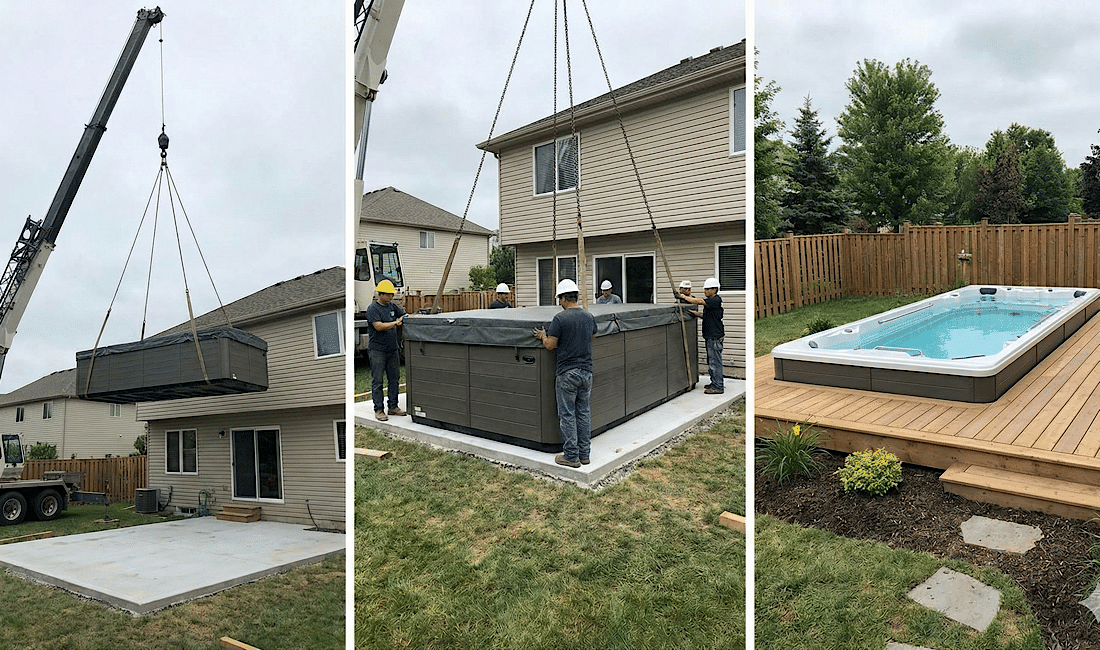
Installing a swim spa in Colorado Springs during the winter months may seem daunting, but with the right planning and professional support, it can be both practical and highly rewarding. At Mile High Hot Tubs, we work closely with homeowners across the Front Range to ensure that winter swim spa installations are completed efficiently, safely, and ready for reliable use throughout the season.
Unlike hot tubs, which are generally lighter and simpler to position, swim spas are large, heavy, and require more advanced groundwork. The added challenge of snow, frozen ground, and cold temperatures means homeowners in Colorado Springs need to approach winter installs with a clear understanding of the timeline, equipment needs, and environmental factors unique to the area’s high-altitude, alpine climate.
Here’s what you can expect when installing a swim spa in Colorado Springs during the winter—and how to ensure a smooth, successful process.
Winter Installation Timeline: Planning Ahead Is Essential
Swim spa installations take time, and winter weather introduces additional variables that can impact your project’s schedule. On average, a winter install in Colorado Springs can take 2 to 5 weeks from permit to final inspection, depending on ground conditions and municipal timelines.
Factors that affect installation timelines:
- Permit delays: Building and electrical permits may take longer to process in winter due to holiday closures or limited inspector availability. It’s recommended to apply early or work with a dealer (like Mile High Hot Tubs) that has experience navigating local codes and can help expedite approvals.
- Ground preparation: Preparing the base for a swim spa involves excavation, leveling, and installing a concrete pad or compacted gravel foundation. In winter, frozen soil can delay excavation or require special tools like heated trenchers or jackhammers.
- Delivery coordination: Swim spas are typically delivered by crane or forklift. In snowy or icy conditions, this requires precise coordination to ensure access paths are cleared, the ground is stable, and large equipment can operate safely.
For homeowners aiming to enjoy their spa before spring, starting the planning process as early as possible—even in late fall—can help avoid unnecessary delays.
Preparing the Site for a Cold-Weather Installation
The Colorado Springs area experiences frequent snow, ice, and freezing temperatures from November through March. Ensuring your installation site is properly prepared can make or break your project timeline.
Access Planning
Clear, unobstructed access is essential for moving the swim spa into place. Heavy equipment requires a stable path free of snowbanks, ice patches, or muddy conditions.
- Snow removal: Homeowners should ensure driveways, side yards, and gate areas are plowed and treated before delivery day.
- Path stabilization: Gravel or plywood boards may be placed along the delivery route to improve traction and prevent damage to the ground.
Foundation Preparation
A stable base is key to long-term performance and energy efficiency. Swim spas should be installed on:
- A minimum 6” thick concrete pad rated for the spa’s weight (typically 15,000 to 20,000 lbs when filled)
- Or, a compacted gravel base with concrete piers or blocks, depending on the model
In winter, pouring concrete requires additional planning. Concrete must be heated or covered to prevent freezing during curing. This adds cost but ensures structural integrity.
Electrical and Trenching Considerations
Cold weather adds complexity to electrical work, especially when wiring needs to be buried:
- Frozen soil may require special equipment to trench for conduit runs
- Wires should be THWN-2 rated for wet and cold conditions
- All connections must be protected in weatherproof, gasketed enclosures
Mile High Hot Tubs works with licensed electricians who are familiar with local codes and winter installation procedures, ensuring all wiring is safe and compliant even in freezing temperatures.
Protecting Your Swim Spa Before and After Installation
Once your swim spa is delivered and placed, additional steps are needed to protect it from winter conditions during setup and initial operation.
Colorado Springs homeowners often choose cold-weather-ready models like the TidalFit Core Swimmer, TidalFit Active EP-12, or TidalFit ActivePlus EP-12 because they offer the swim spa experience while still supporting efficient winter operation when installed correctly.
Cold-Weather Fill Procedures
Filling a swim spa in winter requires precautions to prevent water from freezing in pipes before the heater is activated:
- Water should be added using warm tap water, not a hose left outdoors
- Fill the spa quickly and have power connected in advance so the heater can start as soon as the water reaches safe levels
- Monitor the temperature carefully during the first few hours to avoid freeze risk
If there’s any delay in power connection, thermal spa blankets and space heaters can be used inside the spa cabinet as temporary safeguards.
Post-Installation Insulation and Sealing
After the initial installation, ensure the following for winter protection:
- Full foam insulation within the cabinet
- Custom-fit cover with locking straps and hinge seals
- Spa skirt or wind barrier to reduce heat loss from cabinet seams
Some homeowners in Colorado Springs also add heated enclosures or pergolas around their swim spas to shield them from snow, wind, and ice buildup.
Realistic Expectations for Winter Installations in Colorado Springs
While swim spa installation is absolutely possible in winter, it’s important to approach it with realistic expectations. Here’s what homeowners should prepare for:
- Installation may take longer than in spring or summer due to environmental delays
- Costs may be slightly higher because of specialized equipment and cold-weather procedures
- Proper winter prep is non-negotiable to avoid freezing and damage to spa components
That said, winter installations also come with benefits. Many manufacturers offer off-season discounts during the colder months, and scheduling is often more flexible than in peak spring seasons. More importantly, you can start enjoying the benefits of hydrotherapy and aquatic exercise during the months when your body—and mind—need it most.
Frequently Asked Questions
Can a Swim Spa Be Installed on Frozen Ground?
Yes, but it’s more challenging. Frozen soil is harder to excavate and can delay foundation work. Special equipment may be required, and additional costs may apply.
Will My Swim Spa Be Ready to Use Right After Installation?
If power and water connections are made promptly, yes. However, the initial heat-up may take 8 to 24 hours, depending on ambient temperatures and your spa’s heater size.
Is It Safe to Use a Swim Spa in Winter?
Absolutely. Today’s swim spas are designed for year-round use, even in sub-zero conditions. Proper insulation, a quality cover, and a cold-weather setup make them safe and efficient in winter.
Should I Wait Until Spring to Install?
Not necessarily. If you’re prepared for a slightly longer timeline and some added winter logistics, a winter install can be a smart choice—especially with seasonal pricing and fewer scheduling conflicts.
What If a Snowstorm Is Forecast During My Installation?
Installers monitor weather closely and may reschedule delivery or pour dates if heavy snow is forecast. Snow removal before installation day is the homeowner’s responsibility unless otherwise arranged with your dealer.
Installing a swim spa during a Colorado Springs winter is a practical and rewarding option when approached with careful planning and the right professional team. At Mile High Hot Tubs, we bring years of experience installing spas in high-altitude, cold-climate environments—and we’re equipped to manage the challenges winter brings.
If you’re considering a winter swim spa installation, let’s start the conversation now. From permits to power-up, our team will guide you through every step, ensuring your spa is ready to use safely, efficiently, and without delay—no matter the forecast.

