


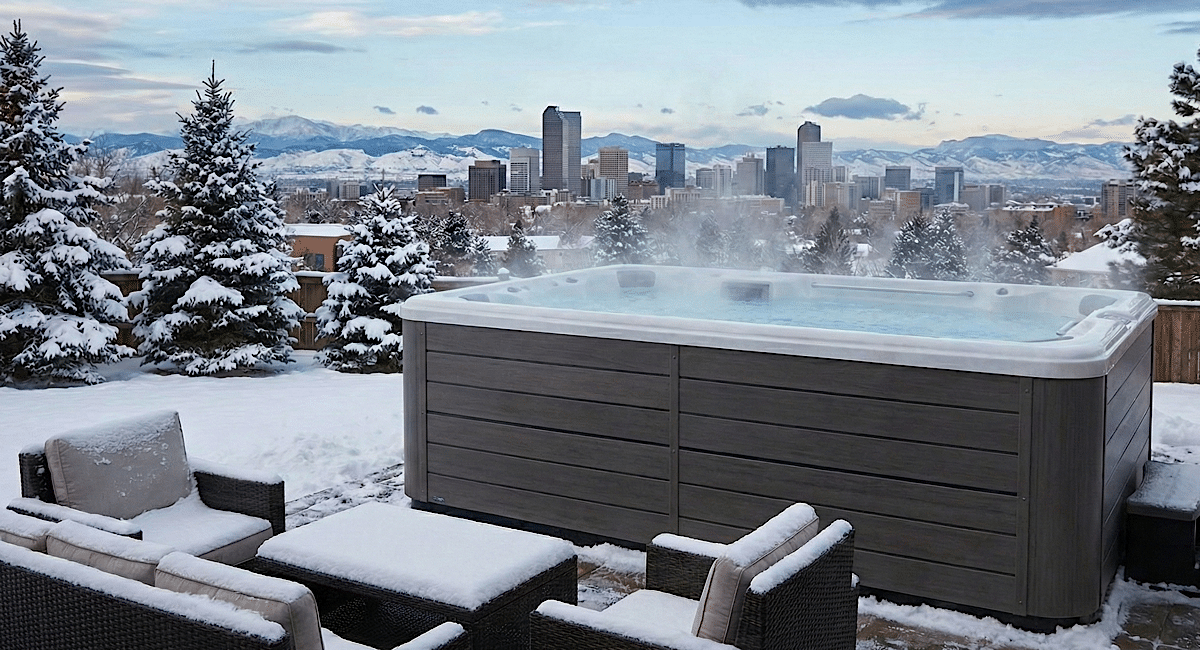
Colorado Springs winters are no strangers to snow, wind, and temperatures that often fall below freezing—sometimes well below. In these conditions, owning a swim spa may raise questions for homeowners: Can it handle extended cold? Will it be expensive to run? Is performance compromised in mountain climates?
At Mile High Hot Tubs, we help Colorado Springs homeowners find swim spas that perform reliably year-round, even through intense winters. Modern swim spa technology, combined with strategic placement and proper cold-weather setup, enables consistent performance in mountain regions. This guide breaks down the essential factors that affect cold-weather performance, from insulation quality to wind exposure, helping you choose confidently and operate wisely.
Why Colorado Springs Winters Demand Smarter Spa Performance
At an elevation of over 6,000 feet, Colorado Springs presents specific challenges to outdoor water features like swim spas. Average winter temperatures hover in the low 30s, with frequent dips into the teens or single digits. Add to this the impact of wind chill and sudden snowstorms, and maintaining a swim spa’s temperature and usability becomes a test of design quality and setup precision.
Without the proper build, swim spas can experience:
- Excessive heat loss through the cabinet and the water surface
- Freezing in plumbing lines during outages or underperformance
- Spike in energy usage due to inefficient insulation or heater cycling
Investing in a cold-weather-ready spa and optimizing installation can eliminate these risks.
Insulation: The Core of Cold-Weather Performance
The most critical factor in winter swim spa reliability is insulation. High-quality insulation prevents heat from escaping the spa shell and plumbing, reducing both energy costs and mechanical strain.
Full-Foam vs. Perimeter Insulation
There are two primary insulation styles used in swim spa manufacturing:
- Full-foam insulation: High-density spray foam fills the cabinet and surrounds plumbing. It minimizes air movement inside the cabinet and prevents freezing during power interruptions.
- Perimeter insulation: A thermal blanket or panels line the cabinet’s interior, leaving air space between plumbing and insulation. While easier to service, this method allows more heat loss—particularly risky in sub-freezing climates like Colorado Springs.
For mountain climates, full-foam insulation is the preferred choice, offering superior thermal protection and greater energy efficiency. Some manufacturers enhance this with multi-layer systems that reflect radiant heat back toward the spa shell.
Real-World Efficiency Gains
According to Hydropool Hot Tubs, fully insulated swim spas can reduce heat loss by up to 60% compared to basic foam or perimeter systems. In Colorado Springs’ winter, this translates to:
- Lower electrical consumption (est. $40–$80/month vs. $150+ on poorly insulated units)
- More stable water temperature
- Reduced strain on heaters and pumps
At Mile High Hot Tubs, we’ve seen customers in high-altitude areas report consistent spa temperatures—even during single-digit cold fronts—when equipped with proper insulation and high-efficiency pumps.
Colorado Springs homeowners who want consistent winter performance often choose swim spas like the TidalFit Core Swimmer, TidalFit Active EP-12, or TidalFit ActivePlus EP-12, which are designed to deliver year-round usability when paired with the right cold-weather setup.
Managing Wind Exposure in Open Yards
Cold air isn’t the only issue in winter. Wind exposure dramatically increases evaporative cooling, pulling heat from the water surface and spa cabinet. Homes in exposed neighborhoods or near foothills in northern Colorado Springs often face gusts exceeding 40 mph.
To protect your investment and maintain water temperature, it’s essential to:
- Install a wind barrier: Fences, privacy walls, or even strategically placed shrubs help break wind paths.
- Use a spa skirt or wrap: Custom skirts prevent cold air from circulating under the spa, where plumbing and components are most vulnerable.
- Secure the cover: A high-quality cover with locking straps and full-length hinge flaps prevents wind from lifting it and releasing heat.
Wind protection is often overlooked, but in real-world conditions, it’s one of the top contributors to unexpected heat loss and power usage in outdoor swim spas.
Cover Quality: The Unsung Hero of Winter Performance
An often-underestimated factor in cold weather spa efficiency is the spa cover. Even the most well-insulated spa can lose significant heat through an outdated or poorly fitted cover.
What to look for in a winter-ready cover:
- Minimum R-15 insulation value
- Full hinge seal to prevent center heat escape
- Tapered design to shed snow and avoid pooling
- Locking clips to keep it secure in wind
Spa covers should be replaced every 5 to 7 years or when they become waterlogged or sag. A water-saturated cover can weigh over 100 lbs and lose more than 50% of its insulation efficiency, causing heaters to run constantly to maintain temperature.
Mile High Hot Tubs offers custom-fitted, weather-rated covers for Colorado Springs homeowners designed to withstand snow load and provide long-term thermal protection.
High-Efficiency Pumps and Heaters
Energy-efficient internal components contribute heavily to winter performance. Older spas often rely on single-speed pumps that cycle on and off at full power, wasting energy and increasing wear.
What to look for:
- Variable-speed circulation pumps: These run continuously at low power, maintaining water movement and heat while using minimal electricity.
- Efficient heaters: Look for titanium or stainless steel components rated for cold weather durability.
- Smart controllers: Allow you to schedule heating cycles during off-peak energy hours and enable remote monitoring.
In cold climates like Colorado Springs, using a spa with programmable energy modes (e.g., “Economy” or “Away”) allows you to reduce temperature settings when not in use—without shutting the system down completely, which would risk freezing.
Backup Systems for Power Outages
Though not a daily issue, winter power outages in Colorado Springs can leave a spa vulnerable to freezing. To mitigate this, consider:
- Thermal blankets: Floating insulation inside the spa helps retain water heat during an outage.
- Cabinet heaters: Low-wattage units or heat tape inside the cabinet prevent pipe freeze if power returns within a few hours.
- Backup battery or generator: Provides temporary power for the circulation pump and heater until full power is restored.
Some high-end swim spas feature built-in freeze protection protocols, which automatically activate safety settings when ambient temperatures drop below a certain threshold. Ask your dealer about this when comparing models.
What Performance Looks Like in a Colorado Springs Winter
With the right spa and setup, a properly winterized swim spa can:
- Maintain stable water temperature (90–104°F) in 0°F ambient conditions
- Operate for under $80/month on average, depending on use and local utility rates
- Avoid freeze risk even during brief outages, thanks to insulation and backup planning
- Withstand snow loads and wind chill without loss of performance
Homeowners across Colorado Springs—from Northgate to Broadmoor—are enjoying swim spas year-round, thanks to advancements in spa design and cold-weather adaptations.
Frequently Asked Questions
Can Swim Spas Freeze in Cold Climates?
Not if properly installed and maintained. Full-foam insulation, efficient heaters, and continuous water circulation prevent freezing. However, extended power outages can pose a risk without safeguards.
Will Performance Decline During Extreme Cold?
High-quality swim spas are designed for consistent performance, even in sub-zero temperatures. Heat-up times may be longer in extreme cold, but the operating temperature will remain stable if insulation and components are efficient.
Is It Okay to Lower the Temperature Between Uses?
Yes. Most modern spas allow you to reduce the water temperature when not in use and quickly reheat when needed. This can save energy without compromising long-term performance.
Do I Need a Heated Enclosure or Room for Winter Use?
Not required. While enclosures help with comfort and wind protection, quality outdoor swim spas are built to function in fully exposed environments—even under snow.
How Often Should I Check the Spa in Winter?
Check your water level, temperature, and cover fit once per week during winter. Ensuring the water level is adequate keeps pumps from running dry, and a proper cover fit ensures maximum efficiency.
Cold weather doesn’t have to stop you from enjoying the benefits of a swim spa in Colorado Springs. With proper insulation, quality components, and thoughtful setup, today’s swim spas are engineered to perform all year—even in mountain winters. Whether you’re looking for aquatic therapy, low-impact fitness, or simply a warm place to unwind in the snow, a cold-climate-ready swim spa delivers.
Mile High Hot Tubs proudly serves Colorado Springs and the surrounding areas with expert advice, cold-weather installations, and winter-rated swim spas designed for performance. Our team will help you choose a model suited for altitude and climate—ensuring you get the most from your investment in every season.

