


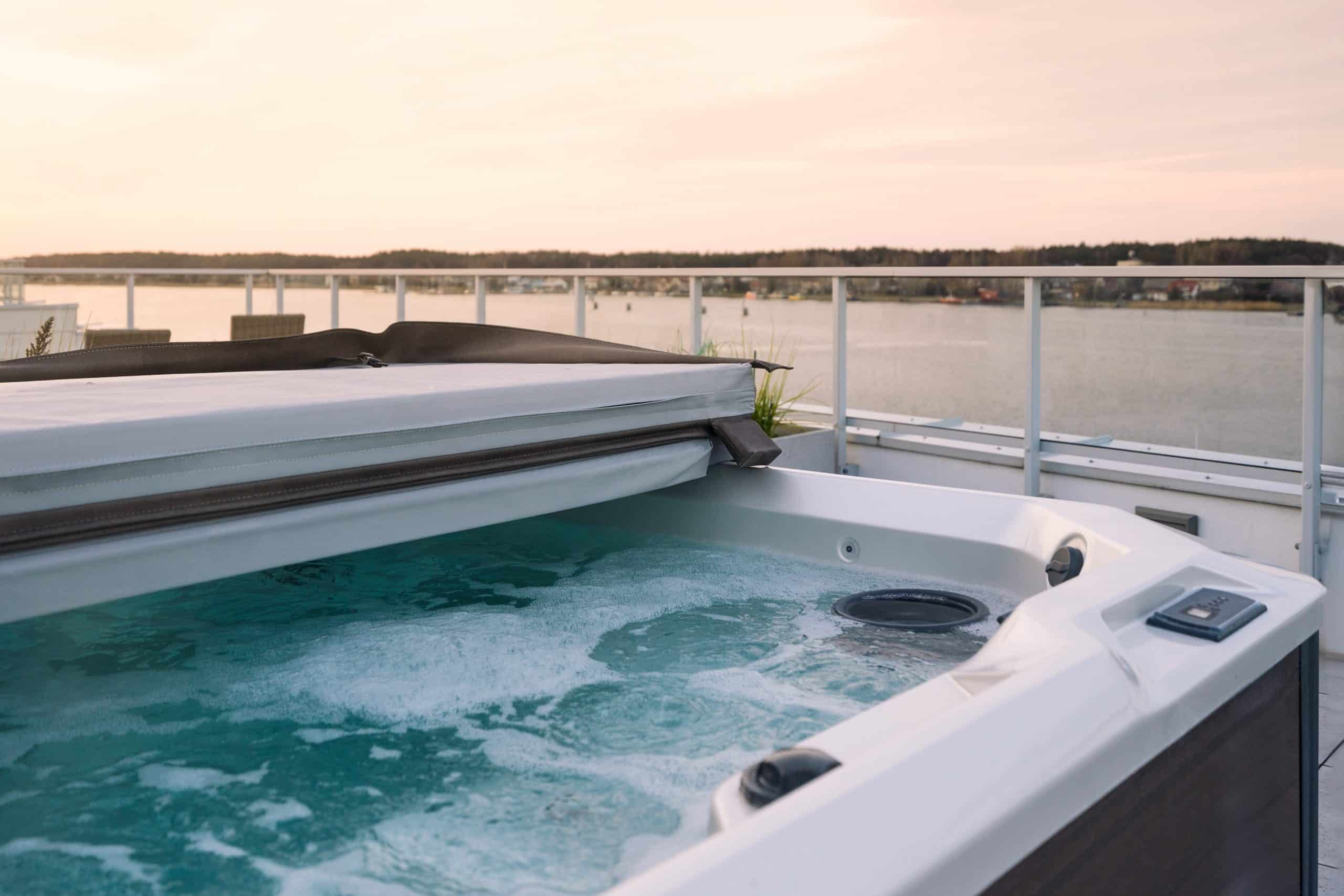
Insulation is the hot tub specification that most Denver buyers underestimate at the point of purchase and think about constantly once winter arrives and the monthly electricity bill reflects the difference between a well-insulated system and a poorly insulated one. When Mile High Hot Tubs works with Denver homeowners who are buying a hot tub before winter, the insulation conversation is one of the most important ones we have, because the choice made at purchase determines the operating cost and performance of the system through every Colorado winter for the decade or more the tub is owned.
This guide covers the primary insulation types used in residential hot tubs, how each performs in Denver’s climate, what the operating cost implications are, and what Denver buyers should look for when evaluating insulation quality before making a purchase decision.
Why Insulation Matters More in Denver Than in Milder Climates
Hot tub insulation’s primary function is to reduce heat loss from the water through the cabinet walls and floor of the unit, which directly determines how hard the heating system must work to maintain the set temperature. In a mild climate where ambient temperatures rarely drop below forty degrees Fahrenheit, the temperature differential between the water and the surrounding air is modest, and heat loss is manageable even with moderate insulation quality.
Denver’s winters create a fundamentally different operating environment. Temperatures regularly drop into the single digits and occasionally below zero during cold fronts, and the extended periods of temperatures in the teens and twenties that characterize a typical Denver winter mean the hot tub’s heating system is working against a temperature differential of eighty to a hundred degrees Fahrenheit or more between the water and the outside air. In this environment, the difference between excellent insulation and mediocre insulation translates directly and significantly into monthly operating costs and into the heating system’s ability to maintain set temperature during the coldest nights.
A hot tub that maintains water temperature efficiently in Denver’s winters with a well-insulated cabinet costs meaningfully less to operate than one that struggles against heat loss through inadequately insulated walls, and the cumulative cost difference over a ten-year ownership period is substantial. Hot tub energy saving tips for winter covers the operational practices that complement good insulation for efficient winter hot tub ownership in Denver’s climate.
Full Foam Insulation: The Most Common Approach and Its Trade-Offs
Full foam insulation, in which the entire cabinet cavity between the shell and the outer cabinet panels is filled with expanding polyurethane foam, is the most widely used insulation approach in the residential hot tub industry and the one most often marketed as the premium insulation standard.
The appeal of full foam is straightforward: foam fills all available space in the cabinet cavity, eliminates air pockets where convective heat loss can occur, and provides excellent thermal resistance per inch of thickness. A fully foamed hot tub cabinet creates a dense, solid insulating mass around the plumbing and equipment that reduces heat loss through the cabinet walls effectively.
The trade-off of full foam insulation is service access. When plumbing components, jets, or equipment inside the fully foamed cabinet require service or replacement, the foam must be cut away to access the component and then repaired or replaced after the service is completed. In Denver, where temperature cycling causes thermal expansion and contraction of plumbing components that can accelerate wear over time, service access is a practical ownership consideration that full foam’s insulation advantage must be weighed against.
Full foam is most effective when the foam completely fills the cabinet cavity without voids or gaps, which depends on the quality of the foaming process during manufacturing. Inconsistently applied foam that leaves air pockets provides less thermal resistance than the full foam specification implies, and this manufacturing quality variable is difficult to assess from the outside of a completed unit. Energy efficient spas save money while relaxing covers the efficiency features that distinguish hot tub models for Denver buyers focused on operating cost minimization.
Partial Foam With Radiant Barrier Systems
A number of hot tub manufacturers use a partial foam approach that combines insulating foam on the shell and in portions of the cabinet with a reflective radiant barrier lining the interior of the cabinet panels. This approach aims to capture some of the heat that the shell and plumbing naturally radiate into the cabinet space, reflecting it back toward the water rather than allowing it to pass through the cabinet walls.
The logic behind radiant barrier systems is that hot tub plumbing, pumps, and heating equipment generate heat during operation, and a well-designed cabinet can use that equipment’s heat to supplement the heating system’s output rather than losing it through the cabinet walls. When the radiant barrier effectively captures and reflects this equipment’s heat, it contributes to maintaining water temperature in a way that adds insulating value beyond what the foam components alone provide.
The effectiveness of radiant barrier systems in Colorado’s cold climate depends on how well the system is designed and how completely the barrier captures equipment heat before it reaches the cabinet walls. Well-designed systems from quality manufacturers perform effectively in Denver’s winters. Poorly designed systems that allow significant heat loss through uninsulated sections of the cabinet provide less thermal protection than their marketing implies.
Comparing the actual monthly operating costs reported by owners of specific models in similar climates, rather than relying on manufacturer claims alone, is the most reliable way to assess real-world thermal performance for any insulation approach. How to run a hot tub economically covers the operating cost factors that informed Denver buyers should understand before committing to a specific model.
Base and Floor Insulation: The Often-Overlooked Heat Loss Path
Wall and cabinet insulation receives most of the attention in hot tub insulation comparisons, but the base and floor of the unit is a significant heat loss pathway that varies considerably between models and is worth evaluating specifically for Denver’s cold climate.
Hot tubs installed on outdoor surfaces in Denver lose heat through the base of the unit to the cold ground below, particularly during periods when ground temperatures drop significantly. A unit with excellent cabinet insulation but minimal base insulation loses heat through the floor at a rate that partially offsets the cabinet insulation’s benefits, and this floor heat loss is most significant during the coldest periods when ground temperatures are lowest.
Base insulation in quality hot tubs includes a combination of insulating materials beneath the shell floor and, in some cases, a fully insulated base pan that creates a thermal barrier between the unit’s interior and the installation surface. Units with comprehensive base insulation outperform those with only cabinet insulation in cold climates because they address all heat loss paths rather than the most visible one.
Evaluating base insulation requires asking specific questions about the floor construction during any hot tub evaluation, because base insulation is not visible from the outside and is rarely prominently featured in marketing materials. A dealer who can clearly describe the base insulation construction and explain how it performs in Denver’s winter conditions is demonstrating the product knowledge that supports confident purchase decisions. What gravel is best for a hot tub base covers the installation surface considerations that complement the unit’s own base insulation for Denver outdoor installations.
Cover Insulation: The Single Biggest Variable in Operating Efficiency
The hot tub cover is responsible for more heat loss than any other single component in a well-insulated hot tub system, and cover quality is the insulation variable that has the most direct impact on operating costs for Denver homeowners.
Hot tub covers work through a combination of foam core insulation and a seal between the cover and the cabinet that prevents warm, moist air from escaping. Cover R-value, a measure of thermal resistance, indicates how effectively the foam core resists heat transfer. Quality covers for Denver’s climate should have an R-value of at least twelve, with premium covers in the fourteen to eighteen range providing meaningfully better thermal performance during the coldest periods.
Cover taper, the slight slope from the center to the edges of the cover, is a practical design feature that prevents water pooling on the cover surface. Standing water or snow on a flat cover adds weight that compresses the foam core over time, reducing the foam’s thickness and its insulating value. A tapered cover that sheds water and snow maintains its full foam thickness longer and performs more consistently over the cover’s service life.
Vapor barrier integrity is the cover component that degrades most predictably over time. The plastic wrapping that protects the foam core from moisture absorption eventually develops small tears and pinhole failures that allow the warm, humid air inside the hot tub to reach the foam core. Foam that absorbs moisture loses most of its insulating value and gains significant weight, producing the heavy, waterlogged cover that is a sign of end-of-life insulation failure. Replacing a waterlogged cover restores insulation performance more effectively than any other single maintenance investment for Denver hot tub owners. Choosing the best hot tub cover covers the cover selection criteria that Denver buyers should apply when evaluating cover quality as part of the overall hot tub purchase.
Shell Insulation and Its Role in the System
The hot tub shell, the acrylic or composite surface that holds the water, is itself a source of heat loss that insulation applied directly to the shell’s underside can reduce. Shell-backed insulation, in which a layer of foam is applied directly to the exterior surface of the shell before the cabinet is assembled, provides thermal resistance at the water-to-shell interface that reduces heat transfer into the cabinet space before it reaches the cabinet walls.
Shell-backed insulation is most valuable in combination with cabinet wall insulation rather than as a standalone measure, because it addresses the heat loss path that begins at the water surface rather than only at the cabinet wall. Hot tubs that insulate both the shell and the cabinet walls address the full heat loss pathway more comprehensively than those that insulate only the cabinet.
The density and completeness of shell-backed insulation varies between manufacturers, and this variation is difficult to assess without specific information from the manufacturer or dealer. Asking about shell insulation construction during any hot tub evaluation provides information that complements the cabinet insulation assessment for a complete picture of the system’s thermal performance. Eco-friendly hot tub upgrades for Earth Day covers the efficiency and sustainability considerations that are directly related to insulation quality and operating cost for environmentally conscious Denver buyers.
Evaluating Insulation Quality During a Showroom Visit
The insulation quality of a hot tub cannot be fully assessed from the outside of a completed unit, but several evaluation approaches during a showroom visit provide useful information for comparison between models.
Asking the dealer to describe the insulation system specifically, including the cabinet insulation type and coverage, the base insulation construction, and the cover R-value, produces comparative information that allows meaningful evaluation across models. Dealers who can answer these questions clearly and specifically are demonstrating product knowledge that is itself a useful quality indicator.
Asking about real-world operating costs for specific models in Denver’s climate, including what current owners in similar climates report for monthly electricity costs during winter months, provides a more practically relevant performance benchmark than manufacturer efficiency claims. Mile High Hot Tubs serves Denver and Colorado Springs homeowners whose operating cost experience in Colorado’s climate provides the local reference data that generic efficiency ratings cannot.
Comparing the warranty terms for the cabinet, insulation, and cover across models provides information about the manufacturer’s confidence in the durability of their insulation system. Longer warranty periods for cabinet components and insulation suggest the manufacturer’s expectation that those components will perform reliably over an extended ownership period. Hot tub company Denver Colorado covers the Mile High Hot Tubs dealership experience and the local expertise that supports confident purchase decisions for Denver buyers.
Frequently Asked Questions About Hot Tub Insulation for Denver Buyers
How much does insulation quality actually affect my monthly electricity bill in Denver?
The difference between a well-insulated and a poorly insulated hot tub in Denver’s winter climate can amount to thirty to sixty dollars per month in electricity costs, and potentially more during the coldest periods when the heating system is working hardest against the largest temperature differential. Over a ten-year ownership period, this difference accumulates to several thousand dollars, which means the upfront premium for a better-insulated hot tub frequently pays for itself in operating cost savings within the first few years of ownership in Denver’s climate.
Is full foam insulation always better than partial foam systems?
Full foam insulation provides excellent thermal resistance when properly applied, but partial foam systems that incorporate well-designed radiant barriers can achieve comparable real-world thermal performance with better service access. The most reliable comparison basis is actual operating cost data from owners in similar climates rather than comparing insulation types in the abstract. Quality matters more than the specific approach, and a well-executed partial foam system from a reputable manufacturer can outperform a poorly executed full foam system from a lesser manufacturer.
How often should I replace my hot tub cover to maintain insulation efficiency?
Most hot tub covers have a service life of five to seven years before moisture absorption and foam compression significantly reduce their insulating value. Denver’s UV exposure and temperature cycling can accelerate cover degradation compared to milder climates. Monitoring cover weight as a practical indicator of moisture absorption is useful: a cover that has become noticeably heavier than when new has likely absorbed significant moisture and lost much of its insulating value. Replacing the cover before it reaches the waterlogged stage maintains consistent insulation efficiency and prevents the accelerated heat loss that a failed cover produces through every winter heating cycle. The ultimate guide to year-round hot tub maintenance covers the maintenance schedule that keeps cover and cabinet insulation performing optimally through Denver’s varied seasonal conditions.
Does hot tub placement affect how well the insulation performs in winter?
Yes, significantly. Hot tubs placed in sheltered locations that block prevailing winter winds experience less convective heat loss from the cabinet exterior than those in exposed positions, which reduces the effective demand on the cabinet insulation. A south-facing placement that receives solar heat gain during the day can also reduce heating system demand during the coldest months. Windbreaks, pergolas, and privacy screens that shelter the hot tub from wind exposure improve real-world thermal performance beyond what the cabinet insulation alone provides. Hot tub landscaping ideas for a stylish summer backyard covers placement and landscaping considerations that affect both aesthetics and year-round performance.
Should I drain my hot tub during extended periods when I am not using it in winter?
Draining a hot tub during extended absences in Denver’s winter introduces significant freeze risk to plumbing components that are difficult to fully drain without professional winterization. Most hot tub manufacturers and dealers recommend maintaining the hot tub at a reduced temperature setpoint, typically around ninety-five degrees, during extended absences rather than draining it, because the heating cost of maintaining reduced temperature is lower than the repair cost of freeze damage. If a complete drain and winterization is necessary, professional winterization that ensures all water is removed from plumbing components is strongly recommended over a DIY approach in Denver’s climate.
What is the best way to compare insulation quality between hot tub models at a showroom?
The most reliable comparison approach combines three information sources: the dealer’s specific description of the insulation system construction for each model, real-world operating cost data from owners of each model in similar climates, and warranty terms for the cabinet and insulation components. No single data point tells the complete story. A model with impressive insulation specifications but limited real-world operating cost data requires more buyer confidence in the manufacturer’s claims than one with documented owner experience in Denver’s winters. Asking the dealer to connect you with current owners of specific models who can speak to their actual winter operating costs provides the most practically relevant comparison data available. Spa resources Denver Colorado covers the educational resources available through Mile High Hot Tubs that support informed purchase decisions for Denver buyers.
Buy Right Before Winter, Not After It Arrives
The difference between a well-insulated hot tub and a poorly insulated one becomes apparent in the first Denver cold snap, and that is not the moment to wish the decision had been made differently. Visit Mile High Hot Tubs or call 720-500-2521 to compare insulation systems and find the hot tub that will perform efficiently through every Colorado winter. Browse our Denver hot tub showroom.

