


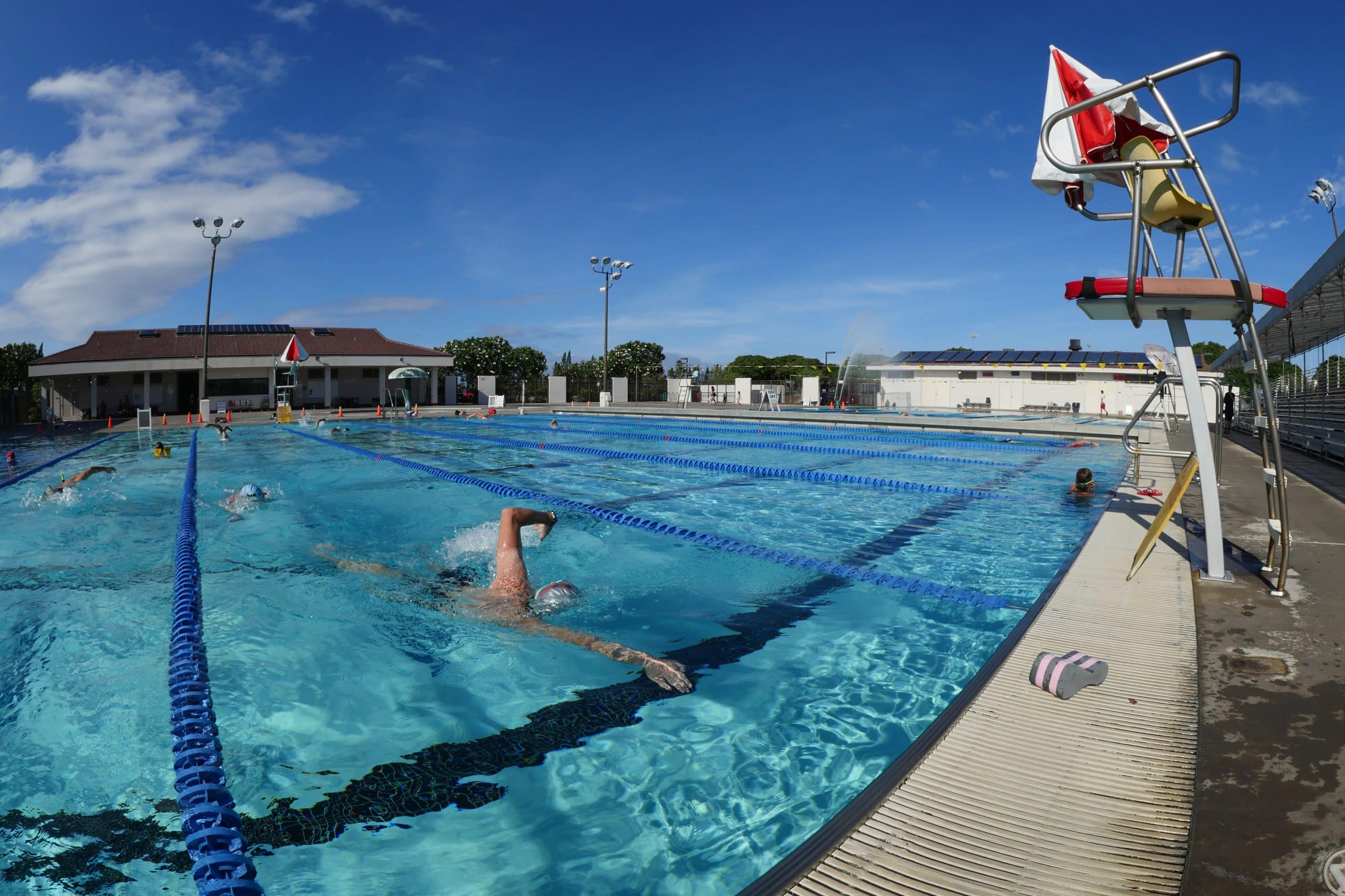
Triathlon training in Colorado is equal parts exhilarating and logistically complicated. The cycling and running components can be done almost anywhere in the state with minimal planning, but swim training consistently presents the access problem that interrupts training consistency for the majority of Colorado triathletes who do not live within easy reach of an open water venue or a lap pool with reasonable lane availability. When Mile High Hot Tubs talks with Colorado Springs triathletes and endurance athletes about swim spas, the conversation almost always starts with the access problem and ends with the realization that a swim spa solves it more completely than any other option available to a homeowner.
This guide covers how Colorado Springs triathletes can use a swim spa for swim conditioning, endurance building, interval training, and recovery across the demanding summer training season.
The Swim Access Problem in Colorado Springs
Triathlon training plans require regular swim sessions, typically three to five per week for athletes in serious race preparation, and the swim sessions are the component that most Colorado Springs triathletes find hardest to execute consistently. Indoor lap pools require membership, scheduling around lane availability, and commute time that adds thirty to sixty minutes to every swim session. Open water venues require a drive to a reservoir or lake, which adds even more time and introduces the weather-dependent variability that makes open water training less reliable than pool training for week-to-week consistency.
The cumulative time cost of the access problem is significant. An athlete who spends forty-five minutes of additional time per swim session on commute, waiting for a lane, and commuting home is investing three to four additional hours per week just in access overhead for three swim sessions. With over a sixteen-week build phase, that amounts to fifty to sixty hours of time that could have been spent training, recovering, working, or with family.
A swim spa in the backyard eliminates the access overhead entirely. The athlete walks out the door, steps in, and is swimming within seconds of leaving the house. The session ends when the training is complete, not when a lane becomes available or a facility closes. For Colorado Springs triathletes who are managing the time demands of work, family, and a multi-sport training program simultaneously, this time recovery is often the most immediately compelling argument for swim spa ownership. Choosing the right swim spa for your home covers the selection criteria that help triathletes identify the swim spa configuration best suited to their specific training needs and budget.
Swim Conditioning in a Swim Spa: Building the Aerobic Base
The foundation of triathlon swim fitness is aerobic base, the sustained cardiovascular capacity that allows an athlete to maintain efficient technique and comfortable effort across the open water swim leg of a race without arriving at the bike transition already fatigued. Building aerobic base in a swim spa follows the same principles as pool-based base building, with the current system replacing lane distance as the training variable.
Base building sessions in a swim spa are characterized by sustained effort at a comfortable intensity, where technique remains controlled and breathing is manageable throughout the session. A typical base building session might begin with a ten-minute warm-up at a current speed that allows easy, smooth swimming, progress to twenty to thirty minutes at a moderate effort current speed that requires focused swimming but allows comfortable breathing, and finish with five to ten minutes of easy swimming at reduced current.
Current speed calibration is the most important skill for new swim spa users to develop, because the current speed that produces the right training intensity varies between swimmers based on their fitness level and technique. A useful calibration approach is to find the current speed at which you can maintain comfortable technique for ten minutes, which represents roughly your aerobic threshold in the swim spa. Sessions at this speed build a base efficiently. Sessions at slightly higher current speeds develop threshold capacity. Understanding where your aerobic threshold sits in the current speed range gives you the reference points needed to structure sessions by intensity.
Tethered swimming using a swim tether attached to the spa wall is an option for swimmers who want to practice open water bilateral breathing and body position without the current system, or who want to add resistance training to their swim conditioning. The tether creates drag rather than current resistance, which produces a different training stimulus than swimming against the current and can be useful for specific technique and strength work within a varied training program. TidalFit swim spas covers the TidalFit swim spa range that is particularly well-suited to serious swim training applications.
Interval Training: Building Speed and Lactate Threshold
Interval training, alternating between high-intensity efforts and recovery periods, is the training stimulus that drives the fitness improvements that separate a triathlete who finishes the swim leg comfortably from one who arrives at the bike in distress. Swim spa interval training is structurally identical to pool interval training, with current speed replacing pace per hundred meters as the intensity variable.
A foundational interval session in a swim spa might involve a ten-minute warm-up at easy current speed, followed by eight to ten repetitions of thirty seconds at a challenging current speed that requires near-maximum effort to maintain position, with thirty seconds of easy swimming or rest between each effort. This session structure, which takes approximately thirty to thirty-five minutes total, produces a meaningful lactate threshold stimulus that drives aerobic capacity improvements over a training block.
More advanced interval structures that Colorado Springs triathletes use in their swim spa training include longer efforts at threshold current speed, descending interval sets where each effort is swum at progressively higher current speed, and combination sets that mix different effort durations to target different physiological systems within a single session.
The intensity feedback available in a swim spa interval session is actually clearer than what most pool swimmers receive during interval training. Swimming against a fixed current speed, holding position, or drifting backward provides immediate, unambiguous feedback about whether the effort level is matching the target intensity. This real-time feedback makes it easier to execute intervals at the intended intensity than counting splits on a pool clock, particularly for athletes who are developing their internal effort calibration.
Tracking current speed settings alongside subjective effort ratings over a training block produces useful data about fitness progression. As fitness improves, the current speed that produces a given effort level increases, which provides a measurable and motivating indicator of training adaptation. Best swim spas for families combining fitness and fun covers the broader household value of swim spas for Colorado families, where fitness-focused adults share the unit with recreational family users.
Open Water Simulation and Race Preparation
One of the most valuable and least discussed applications of swim spa training for triathletes is open water simulation, preparing the body and mind for the specific conditions of a triathlon swim start and race execution rather than simply building general swim fitness.
Open water triathlon swimming involves bilateral breathing patterns, sighting to maintain course direction, drafting off other swimmers, and managing the disorientation of mass starts in cold water without lane lines for reference. A swim spa can be used to practice several of these specific skills in ways that controlled pool lap swimming does not facilitate.
Bilateral breathing practice, alternating between breathing on both sides rather than always breathing to one preferred side, is most easily developed in a swim spa because the continuous swimming without turns allows an extended focus on breathing pattern modification without the interruption of push-offs that break up pool lap swimming. Triathletes who have a strong preferred breathing side can use swim spa base sessions specifically to develop bilateral comfort that improves their ability to adapt to conditions in open water races.
Wetsuit swimming in the swim spa is possible for triathletes who want to practice technique and buoyancy management with their race wetsuit before their first open water session of the season. The swim spa’s current provides meaningful resistance even with wetsuit buoyancy assistance, and practicing the slightly different body position and stroke mechanics of wetsuit swimming in a controlled environment before open water season begins improves race day confidence.
Cold water acclimation for spring races, when Colorado open water venues are often still quite cold in May and June, can be partially addressed by reducing the swim spa temperature to a range closer to expected race conditions for specific training sessions. Full cold water adaptation requires actual cold water exposure, but reducing the swim spa temperature to the low eighties for some training sessions reduces the shock differential between training and racing conditions. Swim spas Denver Colorado covers the full swim spa product range available through Mile High Hot Tubs for Colorado triathletes, comparing options.
Recovery Between Hard Training Sessions
Triathlon training produces a high cumulative fatigue load because the athlete is managing three disciplines simultaneously, and recovery management between sessions is as important as the training sessions themselves for sustainable performance development through a long race preparation block.
The swim spa serves a dual recovery function for triathlete owners. The warm water zone, if the unit is a dual-zone swim spa, provides therapeutic warm water soaking for post-training recovery in the same way a dedicated hot tub would. In a single-zone swim spa, setting the water temperature toward the therapeutic range for recovery sessions provides similar benefits in the same unit used for training.
Active recovery swimming at very low current speeds on the day after a hard training day promotes circulation and reduces residual tension without adding meaningful training stress. A fifteen to twenty-minute easy swim at the lowest comfortable current speed serves the active recovery function that most triathlon coaches recommend as a recovery day activity, and it maintains the daily swim habit and water feel that contributes to technique consistency over a long training block.
Stretching in the warm water after training sessions takes advantage of the heat and buoyancy to facilitate a deeper range of motion work than is typically accessible in a land-based post-training stretch. Hip flexor stretches, shoulder mobility work, and thoracic rotation movements performed in the water with the support of the spa wall produce a more complete flexibility routine than the abbreviated stretching that many busy triathletes perform in the parking lot before driving home from a training session. Exercising in a hot tub or swim spa covers additional in-water exercise and recovery approaches that complement dedicated triathlon training use.
Structuring a Weekly Swim Spa Training Block
For Colorado Springs triathletes in race preparation, a weekly swim spa training structure might include two to three sessions per week with different emphasis depending on the training phase and the week’s overall training load.
A typical training week might include one base endurance session of thirty to forty-five minutes at aerobic effort current speed, one interval session of twenty to thirty minutes focused on lactate threshold or speed development, and one technique or active recovery session of fifteen to twenty minutes at easy current speed with a focus on stroke mechanics or relaxed movement.
During peak training weeks close to race day, reducing the interval session volume and adding a race simulation session that mimics the duration and intensity of the race swim leg allows the athlete to confirm race readiness while beginning the taper that allows fatigue to clear before competition. A race simulation session in the swim spa swims at race effort current speed for the estimated race swim duration, providing a confidence-building preview of the effort the race will require.
During lower-priority training periods, the swim spa sessions can be reduced to two per week with a maintenance emphasis rather than a development emphasis, allowing the athlete to preserve swim fitness while directing more training energy toward the cycling or running priorities of that period. Maintaining your swim spa tips and tricks covers the water care and maintenance practices that keep the swim spa consistently ready for training use across a demanding summer season.
Frequently Asked Questions About Swim Spa Triathlon Training in Colorado Springs
Can swim spa training fully replace pool training for triathlon preparation?
For most age-group triathletes training for sprint, Olympic, and half-ironman distances, swim spa training can serve as the primary swim training venue without meaningful compromise to race readiness. The current system provides all the training stimuli needed for aerobic base development, threshold training, and speed work. The primary limitation compared to a pool is the inability to practice turn technique and push-offs, which is irrelevant for triathlon racing in open water. Elite athletes pursuing pool-based performance targets may benefit from occasional pool sessions to practice race-specific skills, but for the vast majority of triathlon-focused swimmers, the swim spa provides complete training capability.
What current speed should I target for Olympic-distance triathlon preparation?
The target current speed for Olympic-distance race simulation in a swim spa is the speed at which you can maintain comfortable technique and breathing for approximately twenty to twenty-five minutes, representing the typical Olympic distance swim time for age group athletes. Finding this speed through progressive current speed testing during base-building sessions gives you the race simulation reference point. Training sessions that include intervals above this speed develop the fitness reserve that makes race pace feel manageable on race day.
How do I track my fitness progress in a swim spa without pace per hundred metrics?
Tracking the current speed at which specific effort levels are achievable over a training block provides the progression data that pace per hundred provides in pool training. Recording the current speed setting, session duration, and subjective effort rating after each session creates a training log that reveals fitness trends over weeks and months. As fitness improves, the current speed that produces a given effort level increases, which is the swim spa equivalent of pace improvement in pool training. TidalFit swim spas core swimmer covers the current system specifications that affect training range and intensity calibration for serious swim training use.
Is a swim spa appropriate for athletes who are not strong swimmers?
Swim spas are well-suited to developing swimmers because the current can be set at very low levels that allow practice of technique fundamentals without the intensity challenge of training currents. Many triathletes who come from cycling or running backgrounds and are developing their swim skills find the swim spa a more supportive learning environment than a lap pool because there are no other swimmers to contend with, no turn walls to manage, and no time pressure from lane sharing. The ability to focus entirely on technique at a comfortable current speed makes skill development more efficient than it typically is in shared pool environments.
Can I use the swim spa for brick training that combines swimming with immediate cycling or running?
Yes, and this is one of the compelling training applications that swim spa ownership facilitates. A brick session that begins with a swim spa swim and transitions immediately to a bike or run replicates the physiological demands of triathlon transitions in a way that is impossible with gym pool access, where the commute between swim and the next activity eliminates the immediate transition stimulus. Setting up a bike trainer adjacent to the swim spa and practicing the swim-to-bike transition in the backyard produces the specific neuromuscular adaptation that makes triathlon transitions feel smoother on race day.
What swim spa size is best for serious triathlon training?
Longer swim spa models generally provide a better triathlon training experience because they allow a longer current zone and a more swimming-like experience. Most swim spa manufacturers offer models ranging from approximately fourteen to twenty-one feet, with the longer models providing current zones of twelve to sixteen feet that allow a more natural stroke cycle before the spa wall becomes a factor. For triathletes prioritizing training performance over space constraints, choosing the longest model that fits the available backyard space is generally the best approach. Hot tub vs swim spa covers the comparison between hot tubs and swim spas that helps homeowners confirm which product type best fits their primary use goals.
Train Smarter This Season Without Leaving Your Backyard
A swim spa gives Colorado Springs triathletes the training consistency, time efficiency, and year-round access that facility-based swimming cannot match. Visit Mile High Hot Tubs or call 720-500-2521 to explore swim spa options for your triathlon training setup. Browse swim spa options at our Colorado Springs location.

